The Nigerian Infrastructure Discount Is Not a Risk Premium
At the WAPI Summit in 2021, I made an argument about the relationship between Nigerian infrastructure and pension capital. The data point I used then remains the sharpest way to frame the problem: pension capital committed to Nigerian infrastructure sits below 1% of total pension assets. In comparable markets with established infrastructure allocation frameworks, that figure is above 30%.
The standard explanation for that gap is risk. Nigeria's sovereign profile, including political instability, currency volatility, regulatory uncertainty, and contract enforcement gaps, justifies a pricing discount that makes large-scale institutional capital allocation difficult to sustain. Capital goes where the risk-adjusted return is most credible. Nigerian infrastructure is priced as it is because it carries the risk it carries.
That explanation is real. It is also incomplete in a way that changes the practical conclusions.
Two Categories Inside the Same Discount
Sovereign risk reflects genuine uncertainty about outcomes that no intervention at the project or framework level can reliably remove. Country-level political risk, currency exposure, and sovereign default risk belong here. These are documented, priced into credible investment theses, and cannot be resolved by good project management.
Introduced unpredictability sits elsewhere. It comes from the conditions under which a project is operated rather than from the country or the asset class itself, which makes it architectural rather than inherent. Architecture can be changed even where sovereign conditions can't.
When institutional capital prices Nigerian infrastructure, it prices both simultaneously and without distinction. The risk premium is real. But embedded within the total discount is something else: what I would call a framework absence discount. This is uncertainty that reflects not what Nigeria is, but what the delivery architecture for most Nigerian infrastructure projects has not yet built.
These are two different things. The first component is irreducible at the project level. The second is directly removable by practitioners who have already built the relevant frameworks.
What Introduces the Unpredictability
The financial architecture of most Nigerian infrastructure projects makes delivery timelines structurally uncertain before a single day of construction begins. Instruments with incompatible tenors are assembled into financing structures that require renegotiation at precisely the worst moment, usually when cost escalations have already made the project difficult.
Internal link placement note: Add a link to "The Bankability Gap" here in the CMS, using the financing architecture paragraph as the natural placement.
The equity structure creates incentive misalignments between participants whose investment horizons are genuinely different. Public participants operate on budget-cycle logic, private participants on return-horizon logic, international participants on currency-exposure logic, and no mechanism manages the gap between them because the framework that would manage it was never built into the project architecture.
Procurement frameworks lack the cost-containment design that would let a project absorb input cost volatility without affecting delivery commitments. Land cost escalations go uncontained. Delivery sequencing follows budget-release logic rather than engineering logic.
Internal link placement note: Add a link to "Why the Same Infrastructure Project Fails Twice" here in the CMS, using this section as the framework-mechanism cross-reference.
Each of these gaps traces back to the same absence: operational and financial frameworks that, in more mature infrastructure delivery markets, are built into project architecture as standard, rather than added after a failure exposes their absence.
What Operating Inside That Gap Looks Like
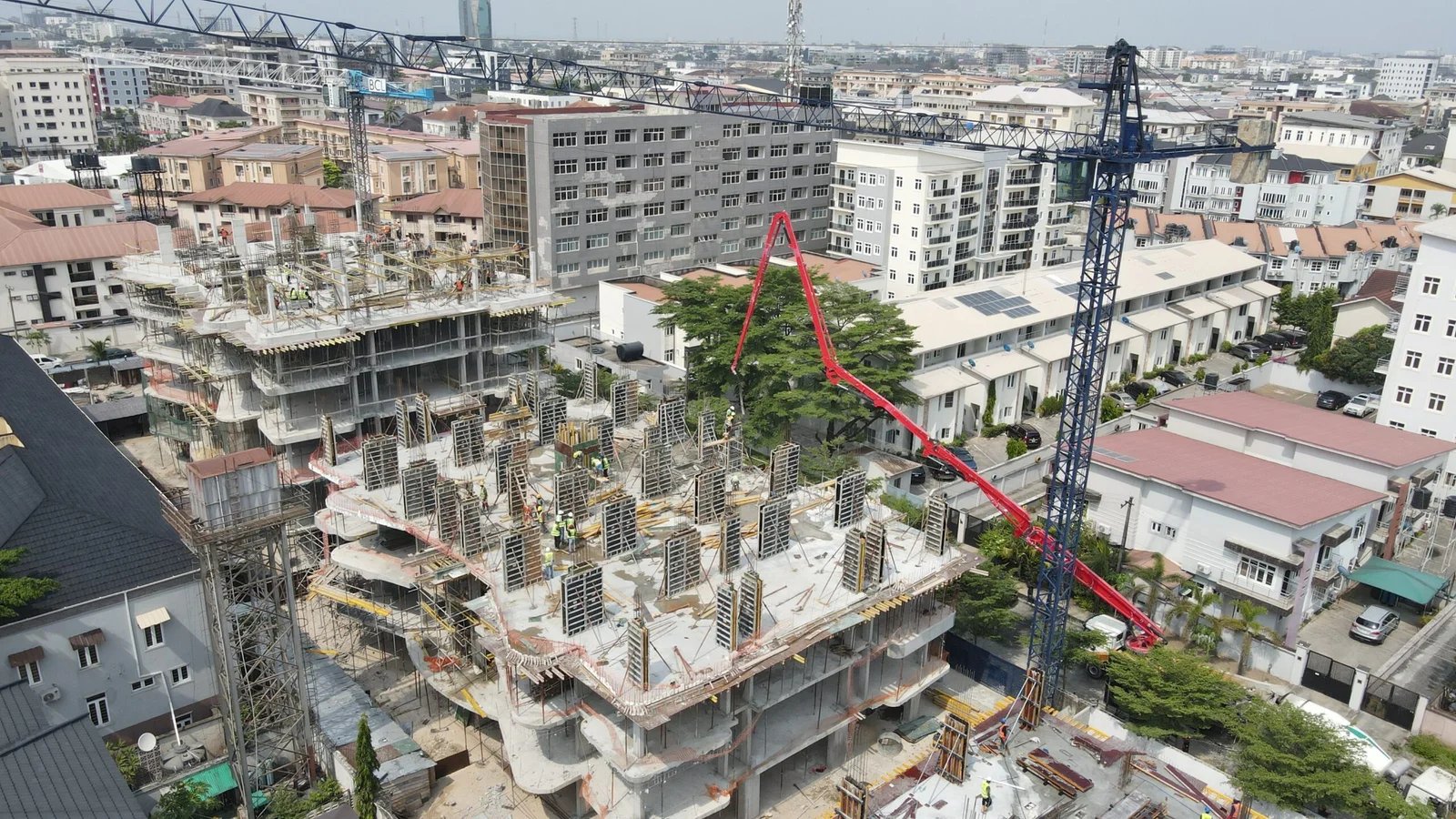
Dutum grew from nine staff running a legacy family business with no formal systems to an organisation delivering 300-plus projects, running fourteen or more concurrently across every region of Nigeria and into other African markets, with revenue growing 200% in 24 months. That growth didn't come from operating in a lower-risk environment than the one described above. It came from building the specific frameworks: financing structures with compatible tenors, procurement architecture with cost-containment built in, and delivery sequencing set by engineering logic rather than budget-release timing. These frameworks close the gap this article is describing.
The evidence this produces is operational, not theoretical: a delivery track record built inside the same sovereign conditions every other Nigerian infrastructure sponsor operates under, without the framework absence discount attached to it.
What This Means for an Allocator
A framework absence discount is only worth pricing separately if it's possible to tell it apart from sovereign risk in practice. The test is specific: ask a sponsor whether their financing tenors are matched to the delivery timeline, whether procurement carries a defined cost-containment mechanism, and whether their sequencing follows engineering logic or budget-release logic. A sponsor who can answer all three with a documented architecture, not an assurance, is not carrying the same discount as one who can't, even where both operate under identical sovereign conditions.
That distinction is where the real capital allocation decision sits, and it's a narrower, more answerable question than "how much sovereign risk am I willing to hold."