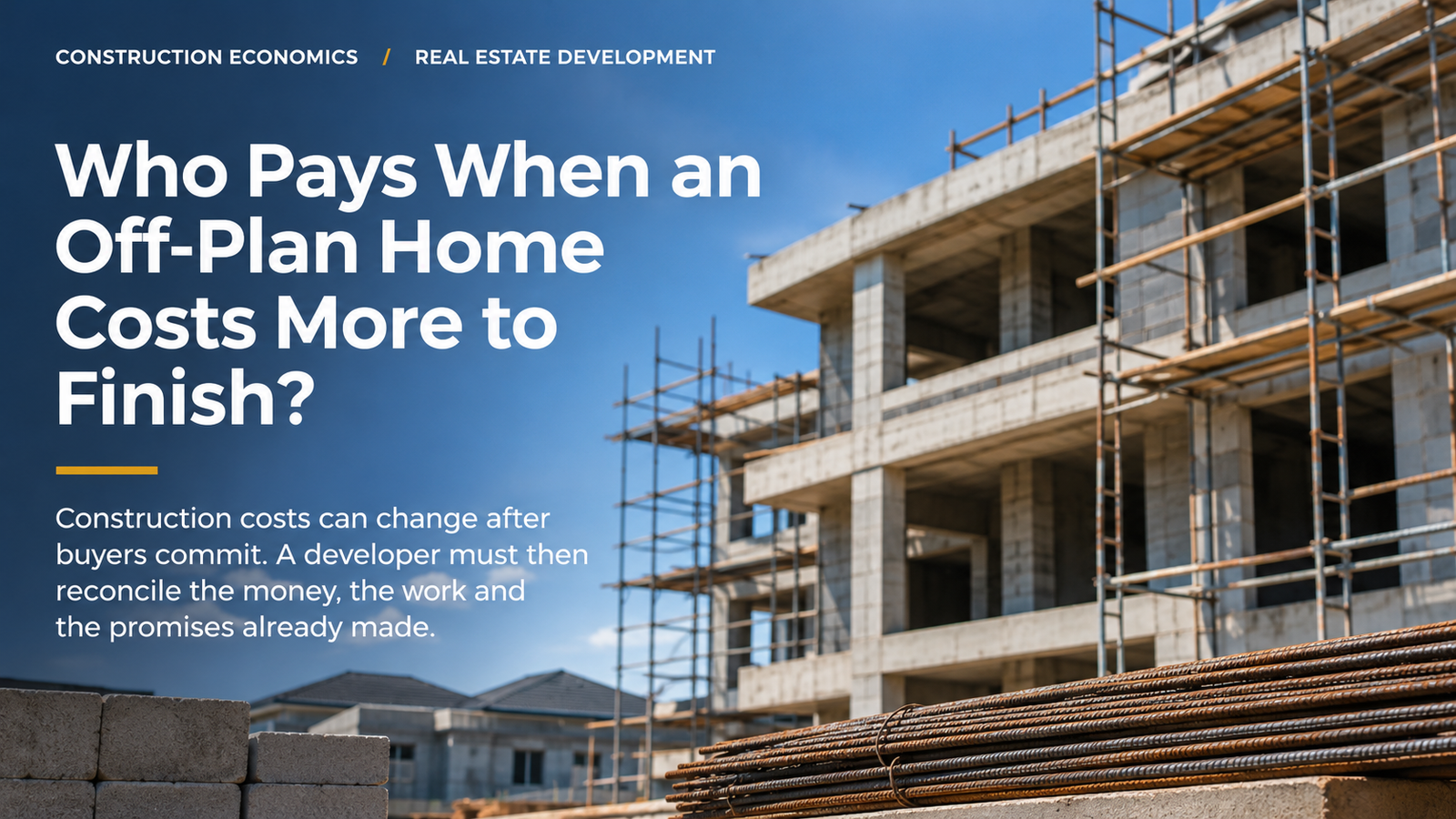
In 2020, a buyer agreed to purchase a three-bedroom apartment at Lekki Pride 1 for about ₦38 million to ₦40 million, payable over eighteen months. He expected to receive the home by the end of 2022. According to a July 2025 Nairametrics investigation, he took possession toward the end of 2024.
The developer attributed the delay partly to COVID-19 disruption and higher building costs. Its chief executive also acknowledged that the original eighteen-month delivery target had been ambitious. The buyer said he paid no more than the agreed purchase amount. Both buyer and developer described further contributions as voluntary, although their accounts differed on when these were requested.
The same investigation reported an unresolved dispute involving a ₦200 million property. An interviewee alleged that the developer had asked her client for another ₦50 million. The contract terms and the developer's response to that particular allegation were not independently established in the report.
One buyer received his home without compulsory additional payment, on the reported account. Another transaction was in dispute. Neither account tells us exactly how much the properties ultimately cost to finish, or where every additional naira came from. That missing information is central to understanding the business of off-plan development.
Once construction costs change after sales are agreed, the developer faces two questions. Who bears the additional expense? And where will the money come from when the next payments fall due?
The selling price is only one part of the calculation
A developer may have agreed prices with buyers long before the final quantities, material purchases and construction invoices are settled. Those buyer agreements determine what has been promised and on what terms. The developer also has agreements with contractors, consultants and suppliers, as well as costs that may not sit inside the main building contract.
The first figure to examine is the expected total development cost against contracted sales. Consider a hypothetical twelve-apartment project with every apartment contracted at ₦40 million. Total contracted sales would be ₦480 million. If the projected all-in development cost, before income tax, were ₦400 million, the projected pre-tax surplus would be ₦80 million. Increase that cost estimate by 20%, to ₦480 million, and the projected surplus falls to zero.
This example is arithmetic, not a description of any real project. It assumes all contracted sales complete at the stated price, and it says nothing about when buyers pay or when costs fall due.

Figure 1. Hypothetical illustration of the article’s twelve-apartment calculation. Not actual project accounts.
That timing creates the second problem. Even a project projected to finish profitably can run short of cash during construction if buyer instalments, committed finance and other available funds arrive later than contractor payments. Conversely, additional borrowing might keep work moving without restoring the profit lost to higher costs. The loan must still be repaid.
An owner therefore needs a current cost-to-complete forecast, a dated schedule of cash requirements and an honest account of funds that are actually available or firmly committed. Expected future sales should not be treated as cash already secured.
What happens when the contractor returns to a changed project?

Archive construction-site inspection: a team reviews site documentation beside exposed reinforcement.
I have seen how an interruption changes this calculation from the construction side.
In a 2025 interview about developer–client relationships, I described a project where foundation work had started before the site was shut by the authorities. The interruption lasted approximately a year. The developer later wrote that the required documentation was ready and asked us to resume.
We revised our construction bills to reflect the circumstances of carrying on with the work. I cannot use that example to establish the developer's final financing arrangements, the particular terms of the purchasers' contracts or what any buyer eventually paid. Those were outside the construction agreement I was discussing.
But the experience exposes a question that ought to be resolved before people argue about increased prices: which agreement gives which party the right, or the obligation, to bear the change?
A revised contractor estimate is not automatically an approved variation or an enforceable claim. That depends on the construction contract, the event, the records and the authorisation given. Even where the developer must pay a legitimate increase, a separate buyer agreement determines whether any part of it can be charged to an existing purchaser.
The reason for an interruption also matters. A delay associated with a government action, a failure to obtain a required permit, a design change and a contractor's own default can have different consequences. The facts must establish what happened before anyone assigns blame or attempts to transfer the cost.
The underlying commercial lesson is narrower, and more useful, than saying inflation makes every project more expensive. A developer's exposure depends on the commitments already made, the risks already allocated and the decisions that caused or prolonged the change.
How does the developer fund completion?
Once the remaining cost is assessed, the owner has to match that expenditure against funds that can realistically be used to finish the development.
It may be possible to absorb the increase through a reduced margin or available reserves. The business may need additional shareholder capital or an approved financing facility. The owner might be able to renegotiate remaining procurement or change the construction sequence. Unsold units may be repriced, although a higher asking price is useful only if buyers will pay it in time.
These choices address different problems. Equity and borrowing can close a funding gap, but they do not make an underlying cost increase disappear. Cost reductions may protect the economics, but changes to a unit's agreed size, specification or other contractual features require proper consideration of purchaser commitments and relevant approvals. A proposed increase in an existing buyer's price depends on the agreement and, where necessary, a genuine new agreement.
The difficulty is not solved by selecting whichever option sounds most convenient. The owner must establish the size and timing of the shortfall, which commitments remain binding, and what the proposed response would cost the business and its customers.
There is another question worth asking early: was the problem caused entirely by events outside the developer's control? In the reported Lekki Pride 1 case, the company cited extraordinary disruption but also acknowledged that its original timetable was ambitious. It subsequently described changes in its approach, including starting construction before launching sales, buying some materials earlier, using more internal financing and allowing more realistic delivery periods. Those are company-reported measures, not independently measured results.
The distinction matters. An external price shock and an overoptimistic delivery plan can occur on the same project. Investigating only the shock may conceal a decision that could have been made differently at the start.
Before changing the buyer's expectation, reconcile the project
A developer should be able to answer five connected questions internally before issuing a materially revised completion or payment proposal.
- What remains to be done? Establish the physical work, statutory and operational conditions required for handover, using an up-to-date programme and competent professional assessment.
- What will it now cost? Include the remaining works, known claims, fees, financing obligations and a defensible allowance for unresolved exposure, clearly distinguishing estimates from approved liabilities.
- Which funds are genuinely available? Separate cash already held, committed funding and amounts contractually due from buyers from uncertain future sales or unapproved financing.
- Where is the shortfall, and when does it arise? A project may have an economic deficit, a temporary cash gap, or both. Each calls for a different decision.
- What has already been promised? Review buyer agreements, specifications, payment arrangements, permitted changes and the conditions attached to any revised delivery date. Obtain appropriate legal and technical advice where required.
Only then can management assess the available response and communicate what a buyer needs to know. That may include the work completed, a material interruption, the effect on the expected delivery date, what is being done and when the next reliable update will be available.
In my view, regular progress updates should be routine. That is a management recommendation, not a rule that every short site interruption must be separately broadcast. When a change affects a buyer's agreed price, specification, rights or expected handover, the communication needs more care than a photograph and an assurance that work is progressing.
A contractor can report what construction work may take under specified assumptions. The developer must consider financing, approvals, contracts and other dependencies before adopting that forecast as a promise to purchasers.
The decision that should come before the next sale
The important question for someone planning a development is not only whether the apartments can be sold above the estimated cost of building them. It is whether the company can finance the work, withstand plausible changes and honour the commitments it is taking on.
The same test should be repeated when conditions change. A revised cost forecast, a verified funding position and a clear record of contractual obligations tell management more than an old margin estimate or a reassuring project update.
The reported Lagos cases do not reveal how every additional cost was ultimately financed. They do show why that information matters. Once money has been committed and delivery is underway, a higher construction bill becomes a decision about capital, contracts and the credibility of what the developer tells buyers next.
Before making a new promise, management should be able to show what remains, how it will be paid for and which commitments the revised plan can still support.
Sources and limits.
Nairametrics, 29 July 2025; Nairametrics, 27 August 2026; Deal Landers interview with Temitope Runsewe, published 15 October 2025. The financial illustration is hypothetical. No private sale agreement, development account or construction-variation record was independently reviewed. The article discusses general commercial reasoning and does not provide legal, investment or engineering advice.